





.jpg)


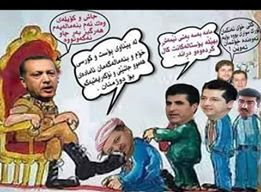


Are double standards mentally ill?
Double standards are about having different rules for the same situation depending on who is involved, and it can often be a conscious or unconscious act. Calling double standards "mentally ill" is a pretty strong diagnosis, but it can definitely be linked to certain psychological or social mechanisms.
Double standards are often about justifying one's own actions or values while criticizing those of others. It can be a way of dealing with cognitive dissonance, that is, the unpleasant feeling that arises when our actions or thoughts do not match each other. It is not necessarily a sign of any mental illness, but if it leads to disturbing behaviors or negatively affects one's relationships, it may be an indication that something deeper may need to be investigated.
It can also be a result of cultural, social or personal factors that influence one's worldview. What do you think about double standards yourself - is it something you reflect on often?
Double standards mean having different standards or rules for the same thing, depending on who is doing it or in what situation it happens. It is when someone condemns or criticizes others for something, but does the same thing themselves without taking responsibility for their own behavior.
An example of double standards could be when someone criticizes others for not recycling, but themselves throws garbage on the street. It is therefore about being inconsistent in their values or actions. It is something that is often used to describe a form of injustice or hypocrisy.
How to identify the person who is spreading false rumors behind your back
Identifying someone who is spreading false rumors can be quite difficult, but there are some signs and methods that can help you get closer to the truth:
1. Guess the source
False rumors usually start with a person who has something to gain by spreading them, perhaps to create drama, sabotage someone's reputation or envy someone. To identify the person, you can try to find out:
Who was the first person to talk about the rumor?
Have others heard the same thing from the same source?
How quickly does the rumor spread and who is spreading it?
2. Analyze patterns
False rumors tend to spread through a specific group of people, often those who like to talk about others. If you notice a specific pattern of people involved, you can start looking at whether they tend to be involved in drama or have a motive to create conflict.
3. Motive
Try to understand why someone would want to spread false rumors. Do they have a personal interest in making someone else look bad? Are they in some kind of conflict with that person? If you know the relationships and history between the people, this can help uncover motives.
4. Confrontation
If you feel you know who is spreading false rumors and you have enough information, you may choose to talk to that person directly. Sometimes people may become defensive or deny it, but it can also provide a chance to clear up misunderstandings or get an honest explanation.
5. Testimonials from others
Ask people you know have been in contact with the person spreading the rumor. If they confirm the same thing, you may get more evidence of who is behind it. Sometimes it is also a good idea to listen to several different perspectives to get a more objective picture.
6. Document
If you are in a situation where you need to prove that someone is spreading false rumors, it can be a good idea to document conversations, messages or testimonies from others. This can be useful if the situation becomes more serious or if you need to raise it with a superior or manager.
Dealing with false rumors often requires patience and caution, so it may be a good idea to avoid spreading more drama until you have sufficient information. How does it feel to be in such a situation.
How to Identify a Fake Teller Through Body Language?
Identifying a fake teller (or someone who may not be telling the truth) through body language can be a challenge, but there are some signs that can provide clues. Here are some body language signals that can indicate that someone is not being completely honest:
1. Avoiding Eye Contact
– When a person avoids looking you in the eye during a conversation, it can be a sign that they are not being completely honest. On the other hand, if someone stares too intently, it can also be an attempt to hide insecurity. A natural level of eye contact is key.
2. Microexpressions
– Microexpressions are fleeting facial expressions (often only for a fraction of a second) that can reveal an emotion that the person is trying to hide. For example, a quick, almost imperceptible frown or a slight pull at the corners of the mouth can reveal confusion or a false sense of satisfaction.
3. Body Positioning
– Fake spreaders may sometimes use “closed” body language signals, such as crossing their arms or legs, which can be a sign that they are trying to create psychological distance. This can also be a way to protect themselves or their fabricated information.
4. Exaggerated Movements or “Overcompensation”
– If someone is trying to be extra enthusiastic or gesticulates excessively, it may be a way to try to hide insecurity or create credibility where none exists. They may be moving their hands a lot or nodding more than is natural.
5. Unpredictable or Inconsistent Gestures
– If a person changes their body language rapidly (such as holding their hands still and then suddenly starting to move them), it may be a sign that they are struggling to keep a story consistent.
6. Physical signs of stress
– Fake spreaders may show signs of nervousness or stress, such as touching their face, especially around the mouth or nose. A nervous laugh or a “sweaty” forehead can also be signals that they are feeling uncomfortable.
7. Too slow or too fast a speech rate
– People who are trying to be fake may speak too fast to try to cover up their lies or too slow as a way of thinking carefully before speaking. In either case, it can be a sign that something is not right.
8. Hands “deserve” more attention
– If a person is constantly trying to hide their hands, keeping them in their pockets or behind their back, it can be a sign that they are trying to hide something. Similarly, holding their hands in a very open or unusual position can signal that they are trying to give the impression of honesty.
9. Sudden Facial Expressions or Changes in Expression
– If someone makes a very intense or exaggerated facial expression that doesn’t feel natural for the situation, it could be a way of overcompensating to cover up a lie.
10. Body Language That Doesn’t Match Words
There are hormones in the human body that are the opposite of what the human being says, and the body language of criminals and liars is always inconsistent with their words
– One of the biggest warning signs of a liar is when their words don’t match their body language. For example, someone might say “I’m absolutely sure of this” but at the same time show nervousness or uncertainty through their body language, such as squirming, hesitating, or avoiding eye contact.
Summary
It’s important to understand that body language is not an absolute indicator of lying. All people can exhibit nervousness or stress for different reasons. In order to make a fair assessment, you should consider the entire context, including the person’s usual body language and their reactions to different situations.
Have you ever had an experience where you felt that someone might not be completely honest


.jpg)


Inga kommentarer:
Skicka en kommentar