





.jpg)




Political psychology is an interdisciplinary academic field, dedicated to understanding politics, politicians and political behavior from a psychological perspective, and psychological processes using socio-political perspectives.
What is the political theory of psychology?
Political psychology is an applied field of research in which psychological theory and methods aid to understand how people engage in the political process. While the field pulls from many schools of psychology and sociology, it is influenced largely by social and personality psychology, as well as political science.
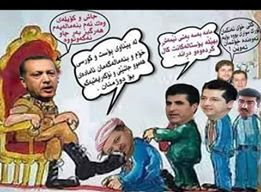
The next article is about psychology and politics. Those who are politicians and are in the position of head of state and do not have the strength and power to tolerate criticism, it is better to give up politics and hand over responsibility to those who have the strength and power to tolerate criticism.

Because people who are in the position of power are considered the father of the nation, they must have the strength and power to tolerate any kind of criticism, and if they do not have such strength, it is better to give up politics altogether.
Because politicians have reached the position of president with the people's vote, and they should consider this, because they have reached power with the people's vote, they should always listen to the people's demands and should not expect the people to listen to the politicians. This is the government, it must listen to the people's demands.
Political psychology is an applied field of research in which psychological theory and methods aid to understand how people engage in the political process.
Politicians should listen to the demands of the nation and respond positively.
Women are a large and important part of society. Ignoring women's rights is against political ethics.
Any politician who has the mindset that the nation must listen to and obey him is a sick personality and should be treated immediately.
Because politicians are elected by the nation and must always listen to the nation's demands, especially the legitimate demands of women, such as social welfare, assistance to unemployed women, and the establishment of complete equality between men and women in all political, social, and professional fields, and equal pay for men and women.
A politician who is in power must have the following characteristics:
1 The ability to tolerate criticism and be open to criticism.
2 Having an inherent conscience that is willing to listen to the demands of the nation.
3 Equality and legal equality.
4 Having human and political ethics.
5 There should be no difference between men and women in his mind.
6 He should stand by his promises and fulfill them to the letter.
7 He should not have misogynistic thinking.
8 Women's rights should be his or her priority.
9 Having long-term plans for the education and healthy growth of youth and children.
10 Politicians should always be in touch with the people and have better solutions for unemployment and job creation.
The Social Psychology of Humor
Political psychology is an applied field of research in which psychological theory and methods aid to understand how people engage in the political process. While the field pulls from many schools of psychology and sociology, it is influenced largely by social and personality psychology, as well as political science. Some major topics of interest in the field include political ideology, political persuasion, and voting behavior (for an overview of political psychology, see Stone et al., . Over the last decade, researchers have increasingly investigated the role of political humor—disparagement humor or ridicule directed at politicians—on people’s attitudes.
Political Psychology, Overview
1 Scope of Political Psychology

1.1 Area of Interest
Let us consider millions of people in different countries all over the world gathering on the same day in main squares and streets of their towns and demonstrating in favor of peace, shouting slogans against terrorism and war. Let us consider other millions of people watching the event on television. If we zoom in on any of the demonstrators, politicians, bystanders, or the people simply watching this political event, we may investigate how they represent people struggling or not struggling for peace, what expectancies they have regarding possible success of peace movements, what plans they have regarding their future engagement in peace movements, and so on. We may also move beyond the specific event and investigate their political views, their political identities, or their voting intentions. All these issues fall within the area of interest of political psychology, which studies the representations and actions of all the people involved in political reality, from simple citizens to political leaders.
Most research in political psychology originates from the extension of “basic” psychological research to the political context, an extension that implies consideration of two main categories of context-specific factors: (1) rules and constraints that are present in the political context, and (2) motivations and goals of individuals and groups who act in the political context. For example, research on how citizens form an impression of political candidates takes into account the fact that in the political context, unlike other contexts, knowledge of a target person is often not direct, but is filtered by media.
It also considers that motivations underlying the citizen’s perception of a political candidate may be different from those underlying perception of a target person in other contexts, and these differences may have an influence on perception accuracy or on traits perceived as most relevant. The influence of the citizen’s ideological orientation on candidate perception is also taken into account—a variable that may not be as relevant in other contexts (see Section 2). These are examples of how research in political psychology may identify a series of factors that moderate or mediate effects already observed by basic psychological research, in some cases also highlighting previously neglected effects.
1.2 Historical Development
A short reference to the historical development of political psychology may offer an idea of the main issues dealt with by the discipline so far, as well as an idea of the psychological theories that have been most frequently assumed as frames of reference. Four main stages may be identified.
For more information about full article contact me
samuel.ku35@gmail.com
046735501680


Inga kommentarer:
Skicka en kommentar