





.jpg)


4534.jpg)


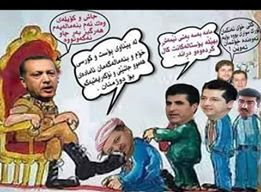


Governments always label news or public information that is against
their interests as an unrealistic and inaccurate source.
However, if we do a more detailed analysis, we will find that what is
published contradicts the collective thinking of the ruling establishment.
This thinking is trivial to those who have sufficient human, behavioral
and social knowledge.
Therefore, use science and knowledge as much as you can, develop your
mind fully, and start studying.
For example, I see ideas that are wrong from my point of view because
the author contradicts my thoughts or his religion contradicts mine.
These things prevent me from learning what I need to. Religion plays a
role in human learning, which hinders learning. For example, I want to confirm
what a Jew wrote, even if it is wrong.
This is wrong. Or I want to confirm what a Muslim wrote because we share
the same thoughts. This is very wrong. Or I want to confirm what a Christian
wrote because it is my religion. This is wrong. Science has nothing to do with
religion.
Someone who wants to learn and is developed
completely removes religion from their thoughts and thinks humanly and sees
humanity.
A capable writer, regardless of their religion, does not matter to the
reader because the reader wants to analyze and use the scientific things that
are in the text and learn.
The writer must always be impartial, writing without regard to culture
and customs, based on a realistic and sharp vision of the future, based on what
exists or has happened, based on past experiences and careful analysis.
Of course, careful analysis without studies is insufficient. It is these
studies that help the writer to analyze what he has studied, and science and
knowledge are very important. According to Barbara Pease and Allen Pease, no
analysis without studies can be called analysis.
A long-term study, whether practical or theoretical, can help our mind
to get closer to reality and to carry out an analysis that is informative for
the reader.
How to
write a source criticism?
Source
criticism
Who is
the text written for?
What
genre does the text belong to?
What is
the purpose of the text?
Is the
text fact related or does it express the sender's opinions?
Is the
text objective?
Is the
information extensive and balanced?
Are there
possible conflicts of interest?
A critic of open source cannot be completely fair and correct because
the critic is a human being and humans are fallible. There may be things within
the source code that conflict with the person's views and thoughts. This conflict can lead to
criticism.
People have the right to criticize all kinds of news, whether scientific
or medical, and to try to correct it. This is a positive action. Criticism
implies a healthy mind that takes a step forward and moves towards evolution.
Since a human being is behind all the sources, it is not possible to
publish information to that source as a correct and accurate source. Since a
human being is behind it, it is possible that changes in the person's behavior
and performance occur due to financial problems, which calls into question the
entire source.
Since no source can be 100% correct, the sources of the text must be
scrutinized. The impartiality or impartiality of the writer must be carefully
examined, which side the person is connected to, or which government
organization and political, social and religious thoughts the person is
connected to. These play a role in the person's behavior and performance.
Today, videos can be one of the most powerful and reliable sources
because videos are always accurate and show the location and event. Video makes
the reader confirm what they are seeing. Because video is clear and
understandable, a text cannot be accepted as widely as a video, even if it is
scientific or reliable news.
Don't forget this: No human is superior to another. All
humans are equal in terms of humanity, but some are more educated and some are
less educated. No politician is superior to an ordinary person. No boss is more
important than his worker. Everyone is human. A police officer is a human being
like you and me. There is no difference between us. He is an employee to
enforce the law. A judge is a human being like you and me. There is no
difference between us. He is the only one who chose this field and worked hard
to achieve that position.
When you face a judge or a police officer or a government
employee or a president, never consider yourself less than him. You are not
less than him. You are a human being. He is a human being. Just learn how to
respond.
Do you have any questions?
I'm at your
service. I'll give you better explanations in the future.
Kind regards
Samuel
samuelku34@gmail.com
0046735501680


Inga kommentarer:
Skicka en kommentar