





.jpg)


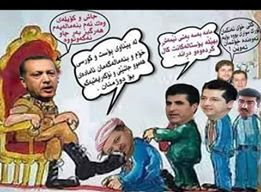


This mercenary is affiliated with traitors and is a mercenary of the Muslim Brotherhood, Erdogan. This sellout has fallen into the line of betrayal and is a dirty traitor.Betrayal itself is a type of mental illness because a traitor will do anything to gain wealth and property, from betraying one's country to committing national and spiritual treason against one's own nation.
Betrayal of the homeland is a mental illness.
What is meant by treason is that today Kurdistan is under occupation by racists, and some are also with the enemy of the Kurdish nation, against the forces that have sacrificed for years for the liberation of Kurdistan, against the victims, with an enemy that does not even allow a Kurd to speak Kurdish nonsense. If someone speaks Kurdish, they will be arrested and imprisoned. These mercenaries work for that country and have become part of the propaganda of the occupiers of Kurdistan.
It seems that you are making a strong moral or political statement, but it is important to separate moral judgment, political loyalty and mental health - they are not the same.
The novel and the mentally ill do not mean opponents of a dictatorial system, but the point here is that some people cooperate with the enemy to occupy their homeland, accompany the occupying forces to occupy their homeland or serve the enemies of their nation, turn their backs on their nation and cooperate with the enemy against their nation.
🔹 Is treason a mental illness?
No. “Treason,” however defined, is not classified as a mental disorder in any psychiatric diagnostic system (DSM-5-TR, ICD-11). It is a political/moral behavior or choice, a sign of psychopathology. Traitors are a mental illness -
🔹 Why equating political behavior with mental illness is problematic
This stigmatizes mental illness and suggests that people with mental health problems are immoral or disloyal.
This relegates political or moral arguments to the realm of pathology, which can be exploited to delegitimize dissent.
This ignores the complex reasons why people act against their state or nation (e.g., ideology, coercion, dissent, moral objections).
🔹 Instead, what drives “treasonous” behavior?
People may act against their homeland for many reasons:
Political disagreement or opposition
Ideological alignment with another group
Frustration with government actions
Personal interests or fears
Moral objections to government policies
None of these are inherently mental disorders.
🔹 If you are interested, we can explore the following:
Psychological factors behind political betrayal or withdrawal
Ethical frameworks for loyalty and dissent
Historical examples and why people have made these choices
Your specific context or situation


Inga kommentarer:
Skicka en kommentar