





.jpg)


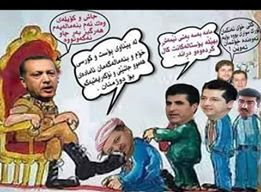


Mohammad Reza Pahlavi: Anyone who does not believe in our party and does not believe in our law can leave the country.
During his 57-year rule, Mohammad Reza Pahlavi failed to build hospitals accessible to the villages, and 98% of the villages were illiterate, there were no roads for cars to travel between the villages, and no medical staff. 92% of the Iranian people were illiterate, and there were not enough schools available in the villages.
The sick Pahlavi regime executed freethinkers and left the mullahs free, and the mullahs continued their religious propaganda in Iranian society without any problems.
What is happening in Iran today is mainly due to Hajj Mohammad Reza Pahlavi.
During the time of Mohammad Reza Pahlavi, many children lost their lives due to the lack of medical staff and specialized doctors.
Read the Satli Sepahi group so that they may understand, of course, this group has neither reason nor proper intelligence, they just imitate each other like sheep.
Now, abroad, with the help of countries that Reza promised free gas and free oil, they are using artificial intelligence to drown out the sounds of demonstrations inside the country, and they are putting another voice on top of it for their own benefit, through AI, so that people can pretend that Reza Pahlavi has supporters in Iran. But this was the role of Ahmed Chalabi during the Iraqi era, when he arrived in Iraq and saw that they had no social base among the Iraqi people.
The difference between the Islamic Republic and Hajj Mohammad Reza Palani..
During the time of Mohammad Reza Palani, 92% of the Iranian people were illiterate. The Shah had no power. They were the masters of the people. In 1957, Carter wrote a letter asking the Shah to leave the country immediately. He did this without delay. All the torturers of the SAVAK came to serve the Mullahs' Republic, and the previous 500s continued.
During the Shah's time, Reza Palani's father gave a region the size of Austria to Turkey and a strategic region in Afghanistan to the Afghans. Mohammad Reza Palani took $31 billion, in addition to $65 million and $45 million from the children of the Shah and Farah Pahlavi before taking $179 million in gold and diamonds out of Iran. Falsification of history and reversal of history by the Pahlavis...
During the time of Mohammad Reza Palani, 96% of Iranian villages were without electricity. They were healthy without drinking water.
Everything about the train line in Iran and the university in Iran was established by the Qajars. There was no doctor in the villages of the country. The mortality rate was 94% during the Pahlavi era. All urban electricity belonged to the Qajars. And what they say about Reza Palani licking shoes is a lie. Reza Palani caused the destruction of Iran. Which modernity? In a census in 2018, 92% of Iranian people were illiterate.
96% of Iranian villages had no electricity and no safe drinking water. So whatever he says about this corrupt mullah-supporting family is a lie. Mohammad Reza Palani was a mullah-supporting and a rotten religious man who brought the mullahs to power,,🫏🫏🫏 ..
The Islamic Republic is misogynistic, ruthless and murderous.. But you won't find any illiterates in Iran. It doesn't listen to any country's orders. Several times the US asked the regime's leaders to leave the country, but they didn't listen at all. The evils of the Islamic Republic are spending the money and wealth of the Iranian people in Lebanon, Iraq, Yemen and Palestine, and blind hostility towards the Israeli government.
One thing about Iranian soil during the Islamic Republic's time, it gave the Caspian Sea to the Russians and the Persian Gulf to the Chinese, but it didn't give Iranian soil to any country, but there are rumors that many regions of Iran have been sold to the Chinese.
So there is no difference between the king and the sheikh. The Islamic Republic is the most corrupt country in the region in terms of financial corruption and government corruption. Of course, all this corruption from the king's government remained for the mullahs. Now the son of Kaskhal Shah is coming below.......
😛😛😛😂🤣🤣🤣🤣 In the past few days, Israel's Channel 13 revealed a report about Reza Mufangi Pahlavi's promises to Netanyahu's government.
Reza Pahlavi, the biggest patriot, still nothing has happened in Iran's oil field, i.e., 60% of Iran's oil wells have been given to Israel for free if they reach their capacity, and Iran's gas is available to Israel for free for 90 years, that too through direct pipelines to Israeli homes. It means Reza Guzid..
Reza Palani, the most treacherous of the Iranian nations.. Well, I wrote above, so there is no difference between the Islamic and Pahlavi regimes. Mullahs give to China, Reza goes to Israel.
The Islamic Republic agents around Pahlavi are listed below with their pictures and biographies.
Mohammad Reza Pahlavi took $63 million with him, an additional $31 billion that he had in a Swiss bank. All of this is considered personal capital, and Reza Pahlavi eliminated his brothers and sisters so that they would not have access to or have any rights to the remaining money. He himself took all this money and now the Iranian people count it as sheep. Farah Pahlavi, in addition to gold, had more than $40 million with her, a lot of gold, diamonds, and precious objects with her when she left Iran in 1979.

And by the way, Hiksha is not Reza Pahlavi's enemy. This person's own behavior and actions create gaps. He is in contact with intelligence agencies such as the IRGC. This is not our word, but Reza Pahlavi's own word.What does the Al-Nasr Corps and Khamenei's fear want from Tajzadeh? Mashallah Abbaszadeh, a senior expert at the Ministry of Interior in the reform government. Mashallah Abbaszadeh, a secret agent of the Islamic Republic with a fascist slogan to divide the nationalities living in Iran and serve Khamenei's goals.
Abdolreza Davari, the regime's intelligence chief, reveals the cooperation of Reza Pahlavi's advisors with the Ministry of Intelligence. Those who want to vote for Reza Pahlavi will eventually regret it, and this regret will be due to the mental illness of the voters. Reza is a fascist. He asked Richard Branson to give him germs to genocide the nationalities of Iran.Reza Pahlavi's scandal is getting worse:
🎈Israel's Channel 14 announced:
Mohammad Javad Zarif had several contacts with Reza Pahlavi during the recent protests and then informed Hassan Rouhani of these contacts.
👈The channel also claimed that both people were detained by the IRGC.
👈Rude bastards!! Before you start obscenities as usual because that's what you only know how to do, pay attention to what Israel's Channel 14 said!!
Yesterday's super-arzhi has become today's super-Pahlavi;
There is no further distance from Salam Famand to King Reza Pahlavi, the Eternal Shah.
We have said and warned many times that the entire opposition is a fake Pahlavi, fabricated and manufactured by the mullahs' regime itself, and they easily export their scum from Iran and become Pahlavi leaders.
Now the original version has been leaked, making judgment easy for everyone...
Politics in Iran is truly a strange university;
Some people graduate from the podium of the universe
And a few years later they enroll next to Reza Pahlavi.
We call it “intellectual transformation”;
But transformation is meaningful when it is accompanied by a clear explanation,
Not by erasing historical memory.
Years of defending a discourse,
Years of attacking the very thing you stand by today…
Should all these turns really be considered a sign of depth of thought
Or an astonishing flexibility in recognizing the direction of the wind?
No one is against change;
But change without accountability
Is more like changing positions than changing beliefs.
People have the right to ask:
If you were so sure yesterday, how are you so sure today?
And if you have reached this conclusion today,
Then on what basis were you so certain yesterday?
Politics may be a playground,
but people's memory is no mere spectator.
pahlavis military
The Shah was a superstitious religious person and was attached to religion.
Inhuman terrorist slogan aimed at dividing the Iranian people by the Islamic Republic's overseas agents under the name of monarchist or reza pahlavis supporting

Don't lie, you fascist trash! Khomeini didn't bring the left, the commanders and generals of the imperial army brought him. Don't you believe it? Look at this document of the army chiefs defending Khomeini! The year 1978 and the revolution were the main reason for the Shah because the people were 92% illiterate, and the Shah had opened the field to the mullahs, and the mullahs continued to brainwash the youth and the illiterate people. And the Shah suppressed or executed freedom seekers and killed intellectuals, and the idiots worked freely among the people, doing their work.. And what is happening in Iran today was the Shah's mistake, the traitor. And the massacre in Iran was the Shah's great betrayal of the Iranian nation.. In 1979, a census was conducted and 96% of the villages in Iran lacked clean drinking water and electricity, and there were no doctors, the mortality rate was 98%, and the villages had no doctors.
Murder of Davud Khan Kalhor, the leader of the Goran tribe of Kurdistan, by the terrorist reza pahlavi ( Shah. On 4 Mehr 1290, Dawood Khan Kalhar was martyred on 8 Jkhordad 1291 for uniting Kurdish provinces and tribes with the aim of overthrowing Reza Khan's government.
Davood Khan Kalhar, the elder of the Kalhar clan, was one of the prominent Kurdish personalities who fought against the oppression of the rulers of Tehran with revolutionary will until the last drop of Kurdish blood.


Khan Kalhar twice marched with the Allies to destroy Tehran and after great sacrifice and heroism, he met with his son Ali Akbar Khan on the evening of 8 June 1291 in a battle with the forces The government and the Cossacks, under the command of Reza Khan Mir Panj, martyred him.
Khan Kalhar is one of the few Kurdish leaders who attacked the capital with the aim of destroying the existing regime.
According to Murkhan, the government forces were many times equal to the Kurdish forces in this war and the arsenal was fully equipped with maximum cannons and weapons, which meant that the war was not equal.

Timur Bakhtiar, who opposed the Shah's behavior and inhumane orders, took refuge in Iraq, and the Shah did everything he could to assassinate him, until he finally placed the Shah's wife in the care of Saddam Hussein's nanny, who was a sexually lustful man. Farah was a young woman. They had sex with the nanny for seven days and nights, and finally the Iraqi government allowed SAVAK to assassinate Timur Bakhtiar, the first head of SAVAK, in Diyala, Iraq in 1349 (1970 AD). This operation was carried out by the Shah's security agents (SAVAK), which ultimately led to his murder and a bomb being placed on his body. Bakhtiar had fled to Iraq after being dismissed from SAVAK.Key points of this event:
Place and time: Diyala, Iraq, August 1349.
Perpetrators: The Shah's secret agents (SAVAK).
Reason: Bakhtiar's desire for power and the creation of an anti-Shah base in Iraq after his dismissal.
This assassination is considered one of the most important cases in contemporary Iranian history due to its political and security complexities.
Timur Bakhtiar
"Timur Bakhtiar was the first head of SAVAK.
Timur Bakhtiar, the eldest son of Fathali Khan Sardar Moazzam, was born in 1913 in the Dezak region of Shahrekord, into a Bakhtiari tribe family. His paternal grandfather, Amir Mofakham Bakhtiari, and his maternal grandfather, Sardar Jang, were leaders of the Bakhtiari tribe.
After completing his primary and secondary education, he went to Beirut at the age of seventeen in 1920 to study and studied at the city's secular school. At this school, he was the same age as many prominent political figures who would later hold important positions in Lebanon, including Charles Helou, who later became the President of Lebanon. Timur Bakhtiar left Beirut for France in 1932 and entered the Saint-Sierre Military School in Paris. After four years of education and military training, he returned to Tehran and in 1936 he entered the army with the rank of second lieutenant and served in the Jamshidabad garrison in Tehran. After a short time, Bakhtiar went to Zahedan to continue his service, and during the two and a half years he was in this province, he rode a camel and surveyed the deserts of Baluchistan and the ports of southern Iran.
Bakhtiar had been in various military units since the 1940s. He returned to Tehran in 1942 with the rank of captain and showed his abilities during the clashes with the Kohgiluyeh and Boyer Ahmad tribes, as well as in the case of the Democratic Sect of Azerbaijan. In 1946, he was promoted to the rank of major, and in the same year he became an officer of the 3rd column in the 3rd Azerbaijan Division. In October 1946, he became the commander of the 2nd battalion of the 4th Kurdistan Division. In Adibehesht 1947, he became the head of the 1st branch of the 4th column of the army headquarters. In October of the same year, he entered the War University and was elected as the commander of the Fateh Cavalry Regiment, and in February 1948, he was the commander of the Shapur Cavalry Regiment. In November 1949, he was the chief of staff of the 1st Guards Division. In 1952, he was the commander of the 3rd Mountain Brigade of the Central Mountains. Prime Minister Mohammad Mossadegh sent Timur Bakhtiar to Bakhtiari at the head of a brigade to suppress Abolghasem Khan Bakhtiari, Timur Bakhtiar's uncle, who had raised the flag of rebellion; he was also able to successfully carry out this mission.
In 1953, by order of Dr. Mohammad Mossadegh, he became the commander of the Kermanshah Armored Brigade and simultaneously, from 25 Ordibehesht of the same year, he was also the military governor of Chaharmahal and Bakhtiari Province. In the event of the coup of 1953, Major General Fazlullah Zahedi sent Colonel Abbas Farzanegan to Kermanshah on 16 August to deliver Roosevelt's message and enlist Bakhtiar's cooperation in cooperating with the coup plotters. They asked Bakhtiar to move to Tehran to help them and overthrow Mossadegh's government, if necessary, but Mossadegh's government fell before Bakhtiar reached Tehran. After the coup, Bakhtiar was promoted to brigadier general on August 19 and appointed to command the newly established Second Armored Division.
With the coup government coming to power, Timur Bakhtiar was appointed to the position of military governor of Tehran on January 26 of the same year. In addition to being the military governor, he also headed the Army Intelligence Department and the Tehran Detective Department. During his governorship, Bakhtiar arrested and tried many opponents of the Pahlavi regime. In 1955, after the military organization of the Tudeh Party of Iran was discovered and 455 members of this party were arrested, they were sentenced to death and heavy sentences. The leaders of the Fedayeen-e-Islam were also arrested by the military governorship in 1956. Seyyed Abdolhossein Vahedi, a member of the Fedayeen-e-Islam, was shot and killed by Timur Bakhtiar in a verbal argument.
Among other famous people who were tried and executed during his military governorship was Dr. Hossein Fatemi, Foreign Minister Mohammad Mossadegh.
During his military governorship in 1955, Timur Bakhtiar, along with Major General Nader Batmanqelij, the Chief of Staff of the Army, and following the objections of Hojjatoleslam Mohammad Taqi Falsafi and Grand Ayatollah Seyyed Hossein Boroujerdi to the activities of the Baha'is in the country, attacked and destroyed their center of activity, known as the Al-Quds Sanctuary, with six trucks of armed soldiers. Later, this place became the headquarters of the 2nd pillar of the army. After this incident, Bakhtiar was also elected a member of the Supreme Council for the Coordination of National Security.
With the help of American advisors, Timur Bakhtiar founded SAVAK and was appointed Deputy Prime Minister and Head of SAVAK in the cabinet of Manouchehr Iqbal on 15th Farvardin 1936. He was promoted to the rank of Lieutenant General in Mehr 1939.
Bakhtiar gathered various departments that were active in the country's security issues - such as the police, the Ministry of Interior, the army's counterintelligence and the military governorship - around SAVAK. He had not refrained from committing any violence and torture during his period as a military governor, and when he formed SAVAK, he transferred violence to this organization. This caused this organization to be mentioned with fear and horror. Among Timur Bakhtiar's crimes in SAVAK is the murder of Karimpour Shirazi, a journalist, who was said to have poured oil on his body and set him on fire in the 2nd Armored Division barracks on Bakhtiar's orders.
During his four years as head of SAVAK, Timur Bakhtiar worked to eliminate the Tudeh Party and supporters of the National Front. Bakhtiar gained a lot of power and wealth as head of SAVAK and was thinking about becoming prime minister. For this reason, he tried to destroy the then prime minister, Dr. Ali Amini, and prove his incompetence. One of the incidents during Amini's prime ministership - which is said to have been caused by Timur Bakhtiar - is the incident of Bahman 1, 1961. On this day, at the invitation of the National Front, students demonstrated inside Tehran University and chanted slogans against the Amini government. At first, military forces were stationed outside the university, and then a paratrooper battalion in civilian clothes attacked the university, beating the students and causing damage to the university's equipment. The next day, Timur Bakhtiar was introduced as the main perpetrator of this incident. Bakhtiar later admitted in his news interviews in Rome that this had been coordinated by the Shah and that the aim was to overthrow the Amini government and form a government of his own.
Bakhtiar's leadership of SAVAK did not last long, and despite his influence, power, and wealth, he gradually became resentful of the Shah. His ambitions had reached a point where he saw himself as the Shah's equal. He built a magnificent palace in Sa'dabad, where the Shah's family also lived, and ordered its exterior to be made of black marble. This palace became known as Bakhtiar's Black Palace. At the time, the Shah was living in a palace in the Sa'dabad royal complex called the White Palace. Angered by Bakhtiar's power and audacity, the Shah forced him to give his palace to his newborn prince, which only increased Bakhtiar's resentment of the Shah. When Kennedy came to power in the United States, the Shah decided to send someone to America to send a message of congratulations and to request military and economic aid to Iran. He chose Bakhtiar for this mission because he believed that he would be of interest to American officials because of his anti-communist struggles.
Bakhtiar arrived in the United States in February 1954. In a meeting with Kennedy, he raised the issue of rampant corruption in Iran’s ruling body and the Shah’s inability to govern the country, and expressed his desire to become prime minister. He also discussed a coup against the Shah in a meeting with the heads of the CIA. American officials promised him that they might support his prime ministership upon his return to Iran. The Shah learned of this agreement and held a grudge against Bakhtiar. Not only did the Americans not help Bakhtiar become prime minister, but on March 12, 1954, the US President sent his special envoy, Orel Harriman, to Tehran. He informed the Shah of Bakhtiar’s demands and plans, and demanded that American officials make rapid changes in the army. The Shah, in accordance with the opinion of American officials, dismissed Lieutenant General Bakhtiar and several other army officials.
As rumors spread that Bakhtiar was interested in becoming prime minister, Ali Amini asked the Shah to order his arrest to restore peace, but Mohammad Reza Shah saw this move as dangerous for the prestige and credibility of the army and, emphasizing Bakhtiar's services to the government, decided to order Bakhtiar to leave the country.
Despite Bakhtiar's forced departure from the country, the relationship between the Shah and Bakhtiar continued until on May 19, 1968, when the Shah was visiting West Berlin, a young man named "Nedar" drove a car full of explosives with a remote control towards the Shah's car. The car was stopped by officers and "Nedar" was also arrested. Nedar repeatedly confessed during his trial that he had done this with money and planning from Timur Bakhtiar. Some believe that this incident was a fabricated conspiracy by SAVAK and the Iranian embassy in Germany to persecute and arrest Bakhtiar and other political opponents of the government. After this incident, the Iranian government refused to renew Bakhtiar's political passport in Europe. Some sources also believe that the divorce of Soraya Esfandiari - Bakhtiar's cousin - from the Shah was another reason for his downgrading in the Shah's position. These factors led the Shah to issue a decree for Bakhtiar's retirement a short time later. In October 1969, the Iranian military court sentenced him to death in absentia for treason. In addition, all of Timur Bakhtiar's property in Iran and abroad was confiscated by the court for the crime of deviance, profiteering, and violating the rights and honor of the people. Timur Bakhtiar's movable and immovable property included a very luxurious house on Saadabad Street; a garden with a building in Tehran known as Bagh Taj; a garden in Tehran-Pars; a garden in Elahiyeh Shemiran; a garden with an area of 10,000 meters in Ramsar; a garden in Izeh Khuzestan; two plots of land in Tehran-Pars; a plot of land in Shemiran-Mobarabad; a plot of land with an area of 300 meters in Tehran; 1,290 shares of the Isfahan Sugar Factory; agricultural equipment such as tractors and agricultural machinery related to the Ahura Kesht Company; a house on Bahar Street; Continental, Cadillac, Benz, and Volkswagen cars equipped with travel equipment; 48 pieces of precious carpets woven in Iran and China, forty-six pieces of jewelry; three dangs from the village of Dezak in Bakhtiari; three dangs from the village of Pardegan in Bakhtiari; one and a half dangs from the village of Betvand in Khuzestan; one and a half dangs and three-quarters dangs in Kordkoy, Gorgan; four dangs from the village of Ardal in Bakhtiari; three dangs and three hebehs from the village of Organ, Bakhtiari; and six dangs, dagh and balaband in Golpayegan, Isfahan.
Bakhtiar, who was in Europe at the time of his death sentence, arrived in Beirut in April 1968 with Shapour Zandania, who was collaborating with SAVAK. He had placed a number of weapons and military equipment in a Land Rover without a license to enter Iraq via Lebanon. Zandania, who was aware of the illegal transportation of weapons, reported it to Major General Abbas Shaghaghi, the SAVAK representative in Lebanon, upon arrival in Lebanon. He also informed the Lebanese police, and Bakhtiar was arrested. Of course, Zandania has said in his statements that the weapons planted in the Land Rover included a number of ATGM anti-tank guns for the capture of Dezful Airport and a number of walkie-talkies, a listening device, a flare gun, medicines, medical equipment, and light travel tents.
After Bakhtiar's arrest, the Iranian government tried to convince the Lebanese government to extradite Bakhtiar to Iran and try him in the country, but Lebanon refused to hand him over to Iran due to the support of various heads of state, including Egyptian President Gamal Abdel Nasser and French President General de Gaulle, as well as other Arab countries, and thus political relations between Iran and Lebanon were severed.
The Lebanese court sentenced Bakhtiar to nine months in prison and Zandania to three months. After his release from prison, Bakhtiar returned to Geneva and expanded the scope of his anti-Pahlavi activities. He wrote several letters about the Shah's powers and the constitution and published a book called The Code of the Iranian National Revolution, its Goals and Objectives or Seven Challenges on the Revolutionary Program of his Future Government.
As Bakhtiar's Iranian passport was about to expire, countries such as Switzerland, France and some Arab countries expressed their readiness to grant him a passport and political citizenship. However, at the same time, General Saleh Mehdi Ammash, on behalf of General Ahmed Hassan al-Bakr, the then President of Iraq, went to Geneva to meet Bakhtiar and announced that the Iraqi government was willing to grant him a political passport. Bakhtiar accepted Iraq's invitation because Iraq and Iran share a border and in the hope of waging guerrilla wars against the government and creating a base to overthrow the imperial system. On May 17, 1969, he entered Iraq on an Iraqi plane with special ceremonies and settled in the palace of former Iraqi President Nouri Saeed. Bakhtiar's arrival in Iraq in 1969 coincided with the height of the Cold War between Iraq and Iran. The first step Bakhtiar took to overthrow the Shah's government was to try to attract and centralize Iran's disaffected elite.
Bakhtiar also tried to get close to the clerics opposing the government in order to use their support and their supporters to achieve his goals. For this purpose, he tried to meet with Imam Khomeini; but the Imam refused him. Other staunch opponents of the Pahlavi regime that Bakhtiar tried to attract were the Tudehs. He, who was once known as the executioner of the communists, tried to attract them to achieve his goals.
With the support of Iraq, Bakhtiar was able to send large quantities of weapons and ammunition to his agent in Iran, Abbas Shahriari, within two years, but all these weapons were delivered directly to SAVAK, because Shahriari had established contact with Lieutenant General Bakhtiar on behalf of the leaders of the Tudeh Party; but in fact, his cooperation plan with Bakhtiar was arranged by the Third Directorate of SAVAK. He, who ostensibly acted as Bakhtiar's representative in Iran, kept SAVAK informed of the details of Bakhtiar's, Tudeh Party, and Iraqi government plans.
Bakhtiar failed to achieve any of his goals, as he was shot on August 6, 1960, and died a few days later. His death, like his life, was mysterious, and various reasons have been given for it.
Issa Pejman, the SAVAK representative in Iraq, has published a book about Bakhtiar's murder titled "The Secrets of Murder and the Amazing Life of Timur Bakhtiar." He states in his book: Some believe that the perpetrator of Bakhtiar's murder was the Soviet KGB and that their goal was to kill Shahriari, who, due to a mistake by the perpetrator of the murder, shot Bakhtiar, causing his death.
Some believe that the perpetrators of Bakhtiar's murder were three Iranian students affiliated with SAVAK who had hijacked an Iranian plane bound for Baghdad. They were able to get close to Bakhtiar after some time and kill him at a suitable opportunity.
Sabeti says: SAVAK had eighteen agents with Bakhtiar, including Bahram Mir-Bakhtiar, his deputy who was brought to him by SAVAK from Kuwait, and another was his adjutant, Eglen. Bakhtiar was also killed by Eglen. He also emphasizes that the assassination was not ordered by him and that Eglen himself took the initiative.
Some also believe that SAVAK established a relationship with a fugitive Tudeh officer through Shahriari. The officer was a former air force major and a great favorite of Bakhtiar. SAVAK made an agreement with the Tudeh major that if he succeeded in killing Bakhtiar, he would send him to South America for a large sum of money. He also accepted. The day they go hunting and Bakhtiar stops his strong Iraqi escort and goes to the hunting ground alone with the senior officer. As soon as they get away from the escort, the senior officer shoots Bakhtiar and he escapes across the Iraqi border to Iran. SAVAK also keeps its promise and sends him to South America with a considerable amount of money.
Bakhtiar married twice. He had a daughter and a son from his first wife, who was also his cousin. Bakhtiar's daughter married the son of Lieutenant General Morteza Yazdanpanah. He also had two sons from his second wife, Qudrat. Qudrat was the wife of a former army colonel named Yemani, the editor of the Aram newspaper, who was forcibly separated from him and married Bakhtiar. He also had two brothers, Manouchehr and Abdul Majid, the former of whom entered the military service and was promoted to the rank of colonel, and the latter became the governor-general of Bakhtiari for a while, and then the governor of Qazvin and Kerman, and in the 20th National Assembly, he became a representative of the National Assembly from the Bakhtiari constituency.”[1]
Footnote:
[1] Encyclopedia of Political Prisons in the Pahlavi Period, Islamic Revolution Literature Office, Hozeh Honari, first edition, 1401, vol. 1, pp. 165-170. With minor editing.


Inga kommentarer:
Skicka en kommentar